Europe and the Faith
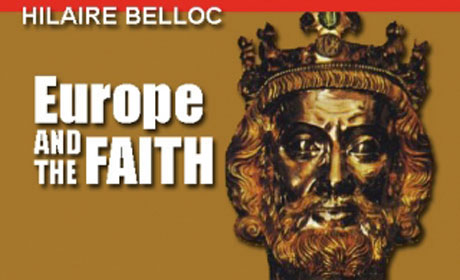
Hilaire Belloc
INTRODUCTION
THE CATHOLIC CONSCIENCE OF HISTORY
I say the Catholic «conscience» of history—I say «conscience»—that is, an intimate knowledge through identity: the intuition of a thing which is one with the knower—I do not say «The Catholic Aspect of History.» This talk of «aspects» is modern and therefore part of a decline: it is false, and therefore ephemeral: I will not stoop to it. I will rather do homage to truth and say that there is no such thing as a Catholic «aspect» of European history. There is a Protestant aspect, a Jewish aspect, a Mohammedan aspect, a Japanese aspect, and so forth. For all of these look on Europe from without. The Catholic sees Europe from within. There is no more a Catholic «aspect» of European history than there is a man’s «aspect» of himself.
Sophistry does indeed pretend that there is even a man’s «aspect» of himself. In nothing does false philosophy prove itself more false. For a man’s way of perceiving himself (when he does so honestly and after a cleansing examination of his mind) is in line with his Creator’s, and therefore with reality: he sees from within.
Let me pursue this metaphor. Man has in him conscience, which is the voice of God. Not only does he know by this that the outer world is real, but also that his own personality is real.
When a man, although flattered by the voice of another, yet says within himself, «I am a mean fellow,» he has hold of reality. When a man, though maligned of the world, says to himself of himself, «My purpose was just,» he has hold of reality. He knows himself, for he is himself. A man does not know an infinite amount about himself. But the finite amount he does know is all in the map; it is all part of what is really there. What he does not know about himself would, did he know it, fit in with what he does know about himself. There are indeed «aspects» of a man for all others except these two, himself and God Who made him. These two, when they regard him, see him as he is; all other minds have their several views of him; and these indeed are «aspects,» each of which is false, while all differ. But a man’s view of himself is not an «aspect:» it is a comprehension.
Now then, so it is with us who are of the Faith and the great story of Europe. A Catholic as he reads that story does not grope at it from without, he understands it from within. He cannot understand it altogether because he is a finite being; but he is also that which he has to understand. The Faith is Europe and Europe is the Faith.
The Catholic brings to history (when I say «history» in these pages I mean the history of Christendom) self-knowledge. As a man in the confessional accuses himself of what he knows to be true and what other people cannot judge, so a Catholic, talking of the united European civilization, when he blames it, blames it for motives and for acts which are his own. He himself could have done those things in person. He is not relatively right in his blame, he is absolutely right. As a man can testify to his own motive so can the Catholic testify to unjust, irrelevant, or ignorant conceptions of the European story; for he knows why and how it proceeded. Others, not Catholic, look upon the story of Europe externally as strangers. They have to deal with something which presents itself to them partially and disconnectedly, by its phenomena alone: he sees it all from its centre in its essence, and together.
I say again, renewing the terms, The Church is Europe: and Europe is The Church.
Book eBook Europe and the Faith
Hilaire Belloc
14 febrero, 2016
update 18 agosto, 2021
Go to the Download pageMore eBooks in English
Confession
Rome Sweet Home
An Exorcist Tells His Story
Theology of the Liturgy
Return to the Baltic
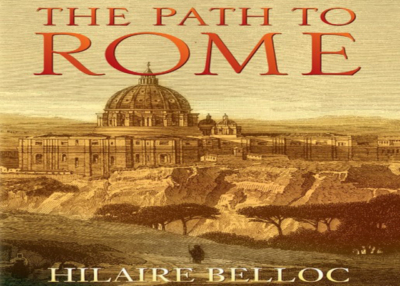
The Path to Rome
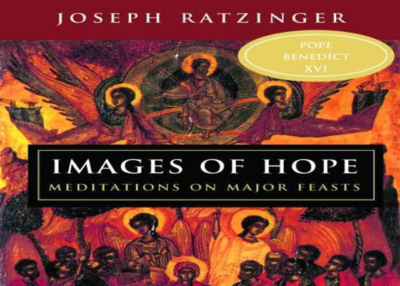
Images of Hope
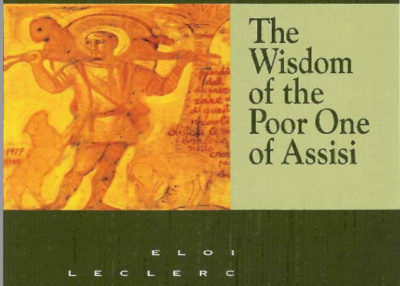
The Wisdom of the Poor One of Assisi
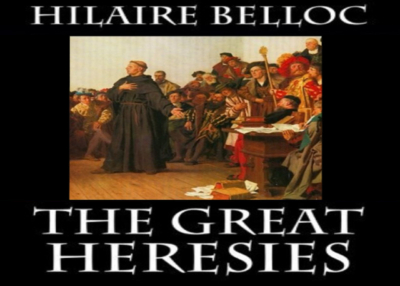
The Great Heresies
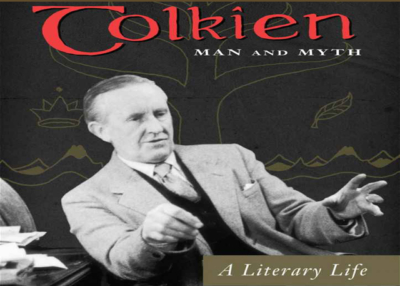
Tolkien: Man and Myth
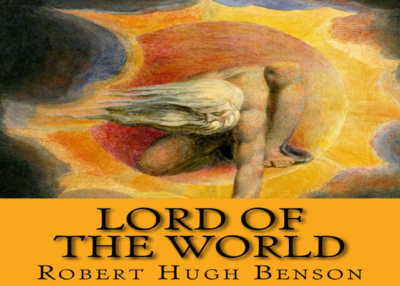
Lord of the World By Robert Hugh Benson
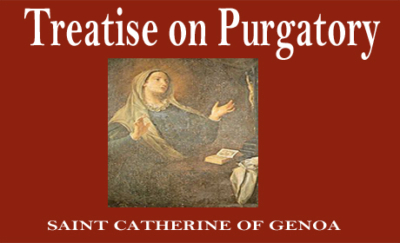
Treatise on Purgatory

Three to Get Married

Via Crucis: A Romance of the Second Crusade
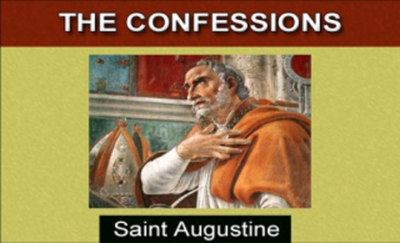
The Confessions of St. Augustine
Read Me or Rue it
The Brown Scapular, the Most Powerful Sacramental
Those Who Serve God Should Not Follow The Fashions
Mary, Motherhood, and the Home
How to Avoid Purgatory

The Story of Annette
The Friendship of Christ
The Imitation of Christ
The Sinner’s Guide
A Letter to the Friends of the Cross
On the Incarnation of the Word of God
Introduction to the Devout Life
Holy Bible
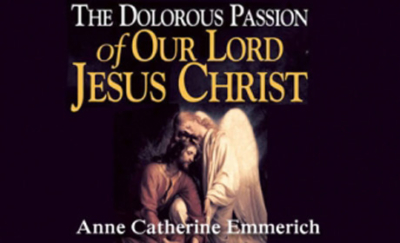
The Dolorous Passion of Our Lord Jesuchrist





Dejar un comentario
¿Quieres unirte a la conversación?Siéntete libre de contribuir!